
Quick answer: what are the best websites to find remote jobs?
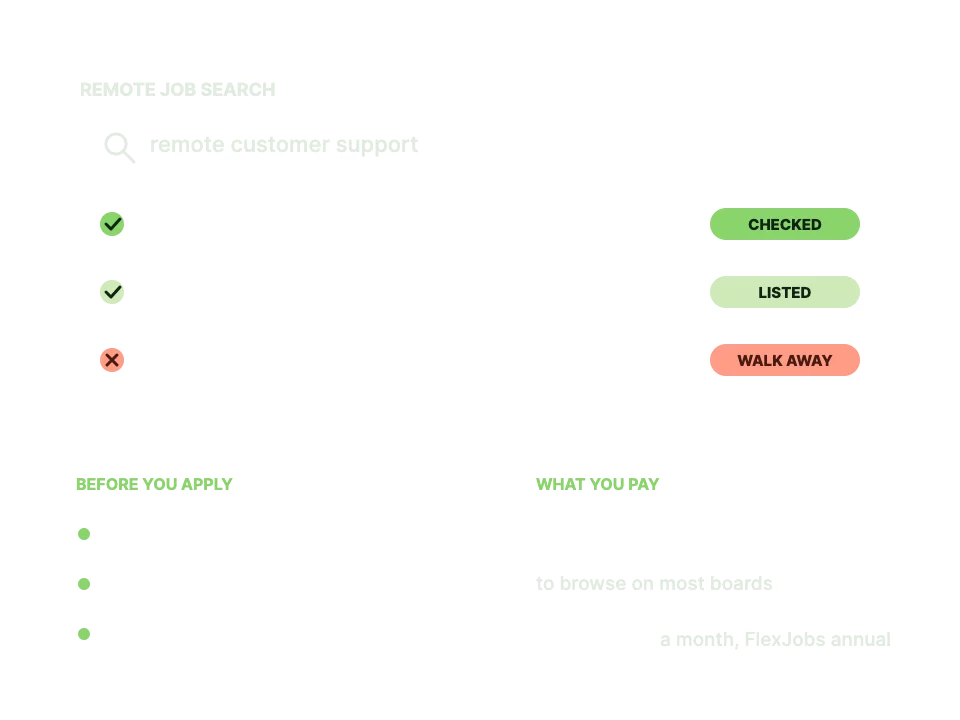
The best websites to find remote jobs depend on whether you will pay: FlexJobs screens every listing by hand for a fee, while We Work Remotely, Jobspresso and Remote OK are free to browse. Remotive and Working Nomads sit in between, and Upwork is for freelance projects. Two or three sites with job alerts will do more than ten open tabs.
- Paid pickFlexJobs, from $5.95 a month on the annual plan.
- Free pickWe Work Remotely, where employers pay to list.
- FreelanceUpwork, a marketplace that takes a fee.
- Check firstAnything that asks you to pay or send money back.
Key takeaways
Listings are not the shortage. FlexJobs counts about 195,000 screened roles on its pricing page and Remotive says it lists more than 128,000, so the real question is which sites filter out junk and which put the useful part behind a fee. We compared ten sites on what each costs, how it screens listings and who it suits, using each site’s own pages as of 3 November 2026. For the demand side, see our remote work statistics.
Which remote job site should you start with?
Match the site to how you search, not to its job count. The map below gives one starting point for each common need, and the table after it puts all ten side by side.
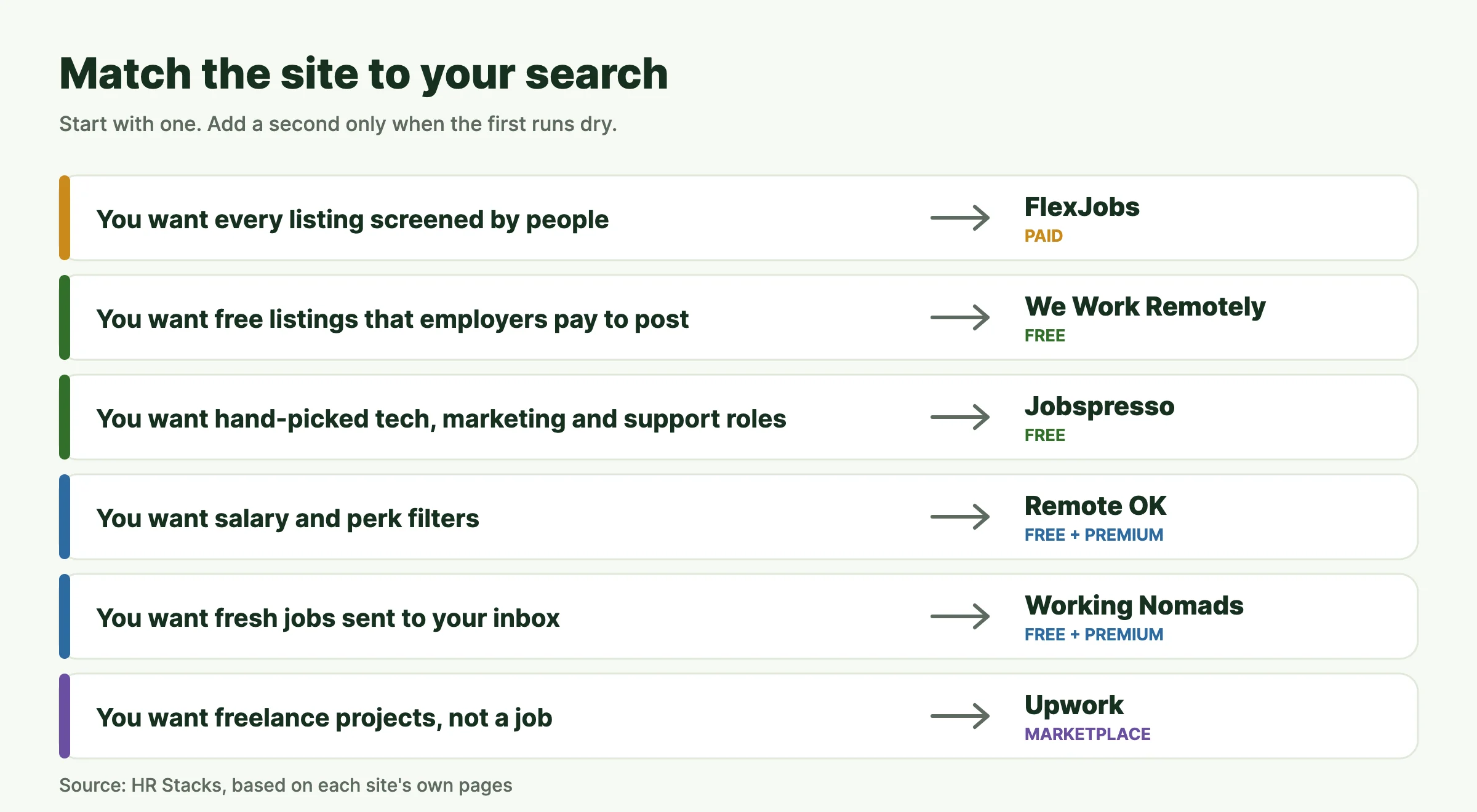
Remote job sites at a glance
Verified 3 Nov 2026The 10 best websites to find remote jobs
The sites run from paid and hand-screened to free and automated. Each section below says what the site costs, how it screens and who it suits.
 1. FlexJobs: hand-screened listings for a fee
FlexJobs is the one site here where paying is the point. The company says staff check every job and that its listings exclude scams, commission-only roles and multi-level marketing. Its pricing page counts about 195,000 listings from nearly 13,000 companies across more than 50 categories.
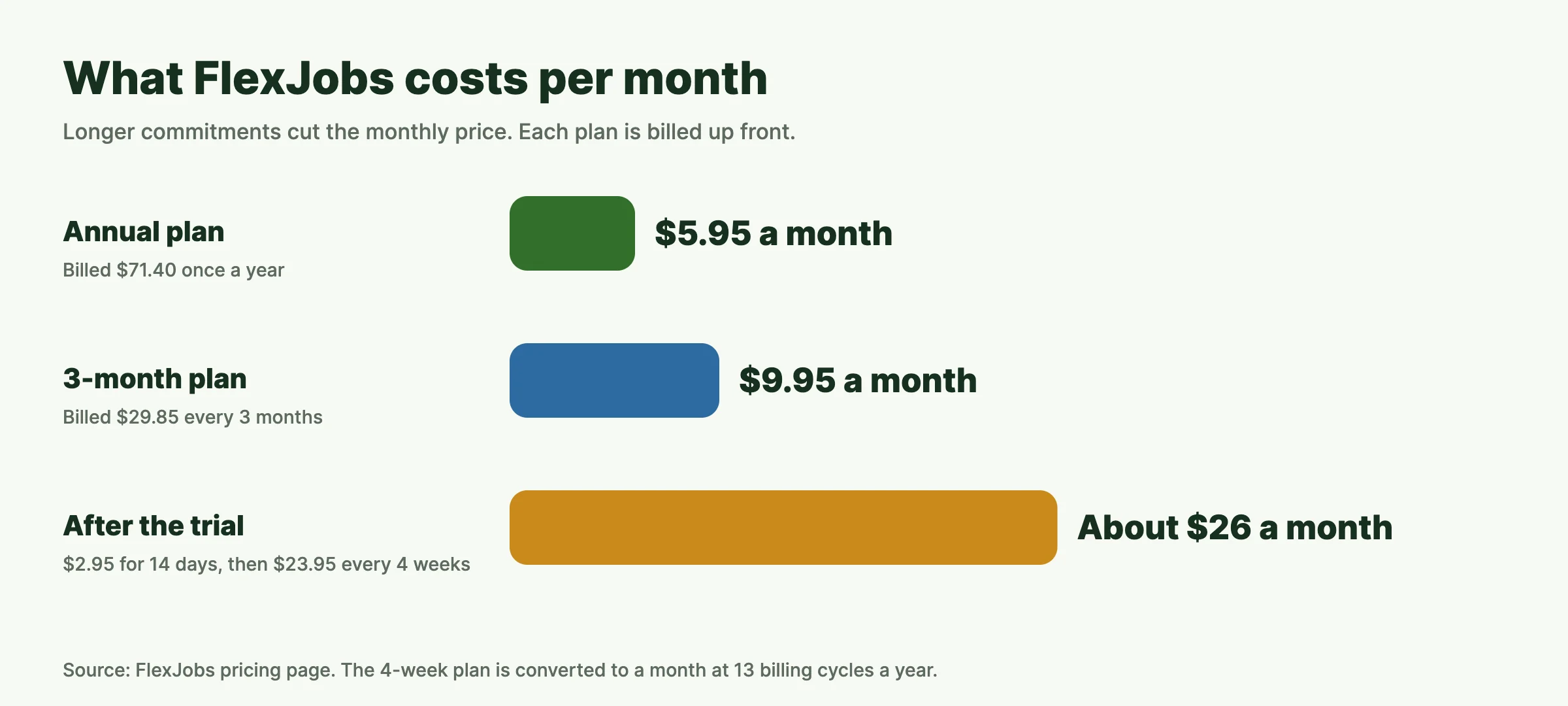
Plans run from a $2.95 trial for 14 days to $5.95 a month on the annual plan, which is billed as $71.40 once a year. There is a 14-day refund window. It fits you if scam risk or wasted time worries you more than roughly $71 a year. It fits less if you search one narrow field, where a free board may list the same roles.
2. We Work Remotely: free listings that employers pay to post
We Work Remotely costs job seekers nothing because employers pay. A listing costs $299 for 30 days, according to the site’s support page, which discourages throwaway postings. You will find full-time and contract roles, and some listings show pay.
Each job states where you can work, such as Anywhere in the World or USA Only, which saves you applying to roles your location rules out. Featured jobs sit at the top, and employers can pay for extra visibility, so treat position as advertising rather than a quality signal.
3. Remotive: a large remote-only list behind a paywall
Remotive has run since 2014 and says it lists more than 128,000 fully remote jobs from vetted companies. You can filter by career level, salary, location, language and employment type.
The catch is access. A free account sees a small share of the list, and a membership shows the rest and surfaces new jobs a day earlier. We could not find the price outside the sign-up flow, so check it there before you commit. In our view, it pays off for software, support and operations searches, where volume matters.
4. Himalayas: profile-based matching, free
Himalayas works more like a matching service than a plain board. You build a profile, state your salary expectations up front and share your search status, and it surfaces relevant roles for free, according to the site. It also offers an AI cover letter tool.
Profile-based sites reward a complete profile, so fill yours in before judging the matches. It suits people who would rather be matched than search. If you want to control the search yourself, a board with filters, such as Remote OK, may suit you better.
5. Remote OK: salary and perk filters, with a premium tier
Remote OK puts pay in the foreground. You can filter by minimum salary, region and country, and by perks such as a four-day week, a home office budget or no monitoring system. It covers engineering, marketing, support, finance and medical roles.
Browsing is free. A premium plan lets you apply to new listings first, which in our view matters mainly in competitive roles where early applicants get seen. If you only need to find out what a role pays, the free version is enough.
6. Working Nomads: curated jobs by email
Working Nomads collects remote jobs from around the web and says it lists more than 50,000, updated daily. You can browse by category, region, experience level, position type and salary, and sign up for free alerts.
A premium subscription exists, but the free alerts do most of the work in a casual search. The site also keeps a scam alert page about fake sites that impersonate it, a reminder to check the web address before you log in anywhere.
7. Remote.co: FlexJobs’ sister site, with remote and hybrid labels
 7. Remote.co: FlexJobs’ sister site, with remote and hybrid labels
Remote.co is listed as a partner site on FlexJobs and covers categories from accounting and customer service to virtual assistant, data entry and transcription work. Each listing shows its type, such as full-time or part-time, and whether the role is 100% remote or hybrid.
That label matters because the feed mixes both. When we checked, many top listings were hybrid roles tied to a city. Filter for 100% remote before you read, or you may spend time on jobs that expect you in an office. Our guide to hybrid remote work explains how those schedules work.
8. Jobspresso: hand-picked roles, free to browse
Jobspresso says every listing is hand-picked and manually reviewed, and that no listing stays up longer than 120 days. Roles cover engineering, product, design, customer support, marketing, sales and writing, plus a catch-all category, and many show pay.
It is smaller than the aggregators, which is the trade-off: fewer roles, fewer dead links. It also publishes a scam warning page. In our view, it is the best free option for tech, marketing and support seekers who dislike sifting.
9. SkipTheDrive: a free aggregator with no sign-up
SkipTheDrive has listed remote jobs since 2013. It is free, needs no registration and displays thousands of jobs from companies worldwide that you can search by keyword or category, with alerts if you want them.
It also offers a part-time job list, a remote company list, a savings calculator and an application tracker. Because it aggregates, a listing’s real source is the employer or another board. Apply on the original page when you can and verify the employer, since aggregating a listing is not the same as screening it.
10. Upwork: freelance projects, not jobs
Upwork is a freelance marketplace, so you win projects through proposals instead of applying for a position. It spans writing, design, development, marketing and support work, and it handles contracts and payments between you and the client.
Freelancers pay a service fee on earnings and spend credits called Connects to send proposals. Upwork has changed its fee schedule over the years, so read the current terms before you bid. It suits you if you want project income or a portfolio. It is the wrong place to look for a salaried role. Hiring freelancers instead? See our freelancer management software list.
Also worth a look: NoDesk lists remote jobs without requiring an account, though its top slots are marked featured. Hubstaff Talent is a free directory of freelancers and agencies, more useful to people hiring than to people applying.
How to spot a fake remote job listing
Scammers advertise the same way honest employers do, on job sites, in ads and on social media, according to the FTC. The FTC reported that task scams, where you are paid to like or rate content, made up nearly 40% of job scam reports in 2024, and that reported losses in the first half of that year topped $220 million. A listing on a screened board lowers the odds but does not remove them.
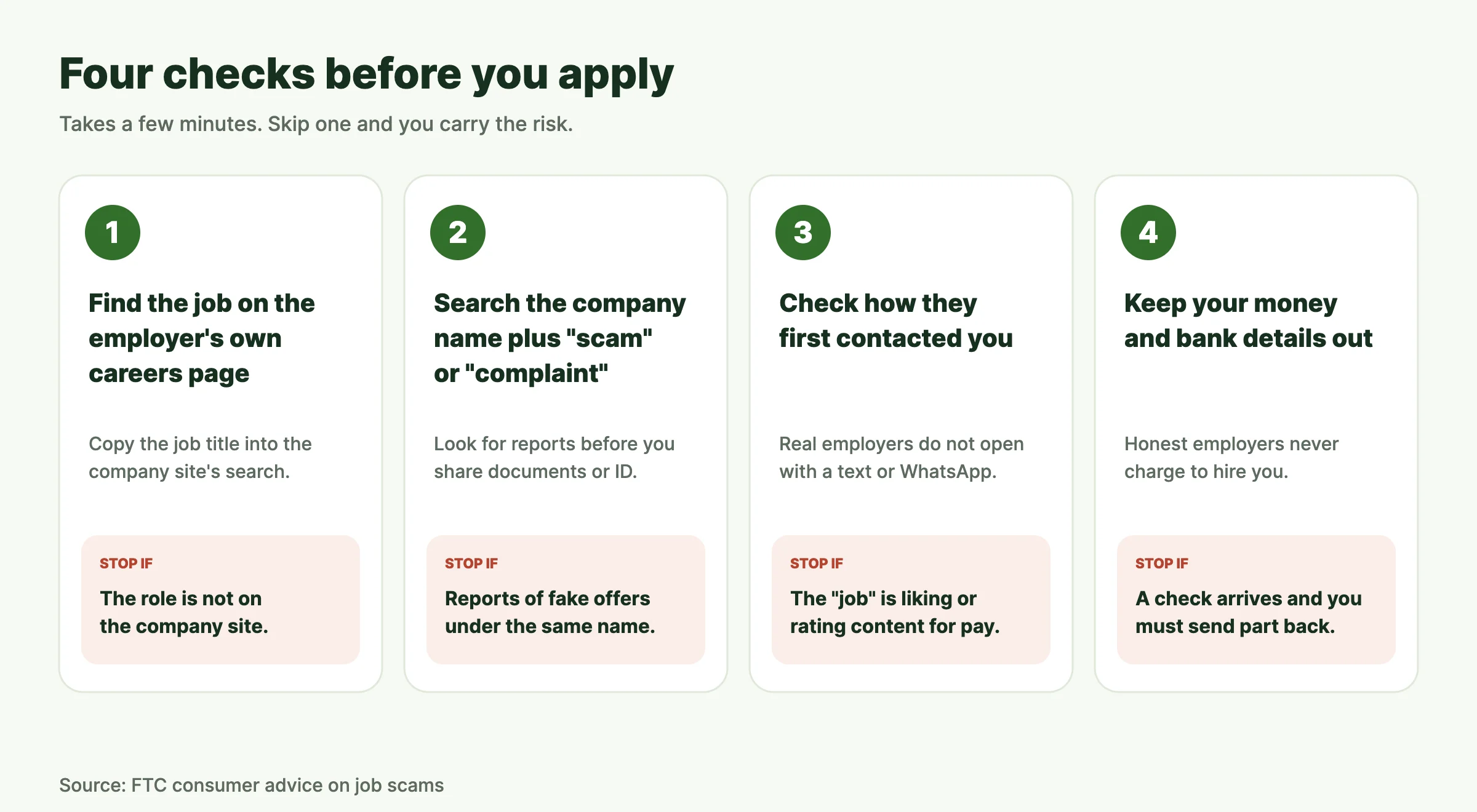
- Asks you to pay for training, equipment or a starter kit
- Sends a check and wants part of it sent back
- First contact is a text or WhatsApp message with few details
- Pays you to like, rate or click things online
- The role appears on the company’s own careers page
- A named recruiter writes from a company email address
- Pay range and location limits are stated
- You interview before any paperwork or money changes hands
Boards warn about impostors too. Jobspresso and Working Nomads publish scam pages, and FlexJobs has a fraud awareness page. Read the one for any site you use.
How to use these sites without wasting weeks
Pick two or three sites that match your search, set alerts on each and apply to new listings within a day or two, while the applicant pool is still small. Apply through the employer’s own page when the listing links to it, and keep a simple tracker so you know what you sent where.
A role open to Anywhere in the World may still be a contract role, because many employers cannot employ someone directly in their country. Our guide to EOR vs PEO vs staffing agency explains how employers handle that. If you are aiming at AI roles, see the best websites to prepare for AI jobs.
If you are hiring: which of these boards also work for employers
Several of these sites double as hiring channels, and their pricing models differ more than their audiences. The table lists what each charges employers, taken from the vendors’ own pages.
What employers pay to post
Verified 3 Nov 2026A board only finds the candidate. For a permanent hire abroad, someone still has to employ them legally, which is what an employer of record does, and our guide to what an EOR costs shows the fees. If you hire at volume, an applicant tracking system or recruitment software keeps applicants from different boards in one place.
Frequently Asked Questions
What is the best website to find remote jobs?
It depends on whether you will pay. FlexJobs is the strongest paid option because staff screen listings. For free, We Work Remotely and Jobspresso give you filtered listings, and Remote OK adds salary filters. Upwork is the pick for freelance projects.
Are there free websites to find remote jobs?
Yes. We Work Remotely, Jobspresso, SkipTheDrive, Himalayas and Remote.co are free to browse, and Remote OK and Working Nomads are free with optional premium plans. Remotive and FlexJobs keep most listings behind paid access.
Is FlexJobs worth paying for?
It can be if you want every listing screened and your time is the constraint. The annual plan costs $71.40, or $5.95 a month, and there is a 14-day refund window. It is less useful if you search one narrow field, where a free board may list the same roles. Cancel the $2.95 trial before day 14 if you do not want it to renew.
How can I tell if a remote job is legitimate?
Find the listing on the employer’s own careers page, search the company name with the word scam or complaint, and check how they contacted you. Real employers do not ask you to pay, and they do not send a check for you to deposit and send part back. The FTC advises ignoring unexpected job texts and WhatsApp messages.
Which site is best for entry-level remote jobs?
Use the experience filters. Remotive has a career level filter that includes entry level, Working Nomads sorts jobs by experience level and NoDesk has an entry-level category. Expect more competition at that level, so set alerts and apply early.
Can I find freelance remote work on these sites?
Yes. Upwork is built for freelance projects, Hubstaff Talent is a free directory where clients contact freelancers and agencies, and Remotive, Remote OK and FlexJobs all list freelance or contract roles. Freelance platforms usually take a fee or charge for proposals, so compare the terms.
Can I work remotely for a company in another country?
Often, but check the listing. We Work Remotely labels jobs such as Anywhere in the World or USA Only, and Remotive, Remote OK and Working Nomads let you filter by location. Many companies hire people abroad as contractors or through an employer of record, so ask which applies and what it means for tax and benefits.
How many remote job sites should I use?
Two or three. Pick one that screens listings, one free board in your field and, if you freelance, a marketplace. Set alerts on each. Aggregators repeat listings from other boards, so more tabs mostly shows the same jobs.